
High standards are easy to claim and much harder to prove.
In service businesses, especially those that ask guests to place real trust in you, it is not enough for leadership to care privately about excellence. It is not enough for a company to know, internally, that its processes are thoughtful, that its team is well trained, or that its technical quality is strong. If those standards are going to shape trust, loyalty, and reputation, they have to become visible. They have to show up clearly enough that the guest can actually feel them.
At Sudsies, I think about this often because guests do not experience our intentions. They experience what shows up. They experience how the phone is answered, how a pickup is handled, how garments are presented, how a concern is communicated, how an order is returned, and how the finished result feels in their hands. If our standards are real, they should not live only in training manuals, internal meetings, or quality-control checkpoints. They should be perceptible throughout the entire experience.
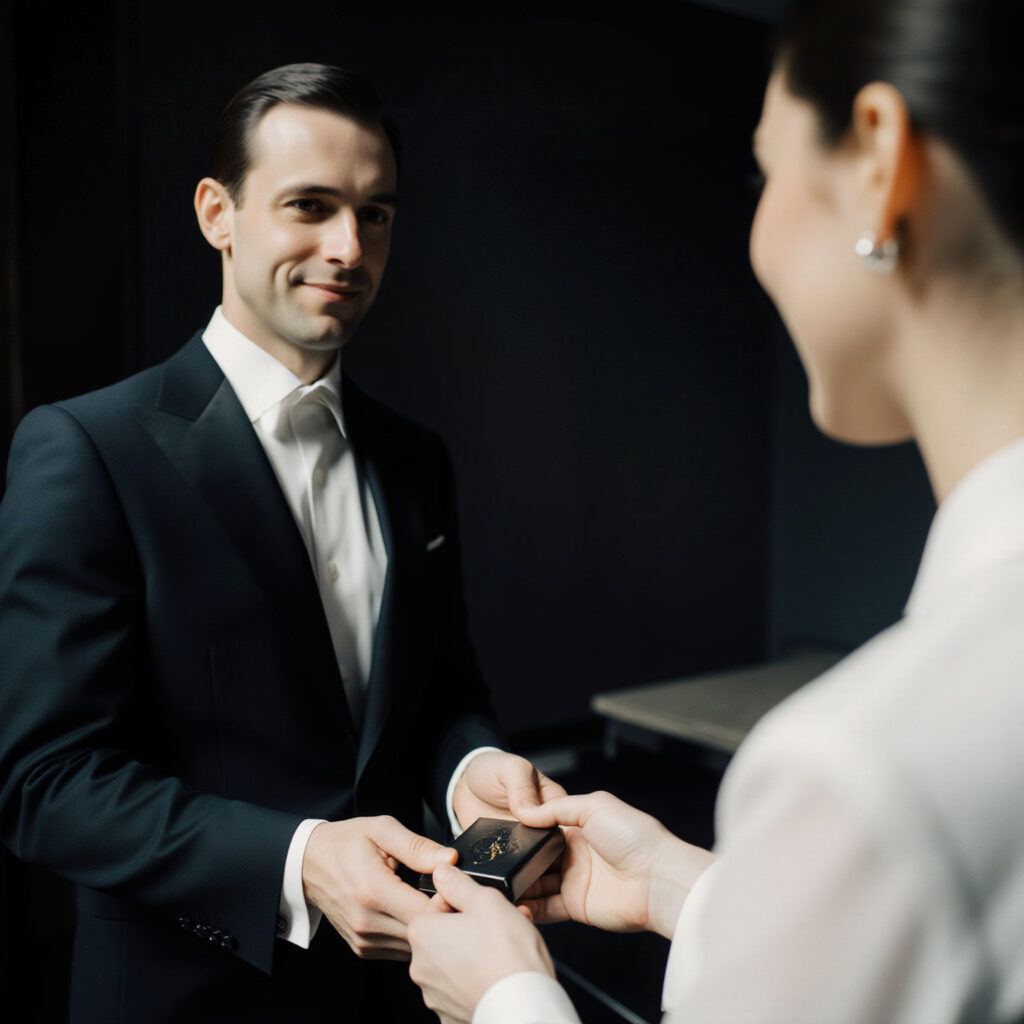
I was reminded of this years ago during a stay at the Four Seasons Hotel Chicago. I still remember the first time a member of the housekeeping staff greeted me as “Mr. Loeb.” It was a small moment, almost vanishingly small on paper, but I was positively tickled by it. Not because it was extravagant, and not because it was theatrical, but because it made the service feel personal, attentive, and intentional. In that moment, whatever training, discipline, and culture existed behind the scenes became visible to me. The standard was no longer hidden. I could feel it.
That is what great service does.
It takes what might otherwise be a routine interaction and gives it form, polish, and human intelligence. It creates a moment that quietly tells the guest that someone is paying attention. The reason that Four Seasons moment stayed with me is the same reason any elevated service experience stays with a person. It transforms care from an internal aspiration into something unmistakably lived.
That is one reason hidden excellence is never enough.
A company may know, privately, that it has strong quality controls, experienced team members, disciplined workflows, and people who care deeply about the work. All of that matters. In fact, it matters enormously. But if the outward experience feels rushed, uneven, disorganized, or impersonal, the standards do not feel real to the guest. The guest cannot evaluate what they cannot see. They interpret the company through the points of contact available to them, and those visible moments become the evidence on which trust is built.
The guest experience, after all, is cumulative.
One weak touchpoint can distort how the rest of the company is understood. A guest may never see the care taken in stain treatment, fabric assessment, finishing, inspection, and quality review if the front-facing experience feels careless or confusing. That may not seem entirely fair from inside the operation, but it is how service businesses are actually judged. People infer the whole from what they can feel.
This is why visibility matters so much.
Visible standards create confidence. They reassure the guest that the business is intentional, disciplined, and respectful. The tone, timing, presentation, communication, responsiveness, and technical result should all point in the same direction. The guest should feel coherence. They should sense that the company knows exactly what kind of experience it wants to deliver and has organized itself around delivering that experience well.
That does not require stiffness. It requires alignment.
The best service businesses understand that polish and warmth are not opposing ideas. A service experience can feel gracious without becoming casual. It can feel precise without becoming cold. In fact, that balance is often what distinguishes true hospitality from mere efficiency. The service should feel human, but it should also feel considered. It should feel natural, but never careless.
At Sudsies, visible standards may show up in ways that seem small from the outside but matter enormously over time. They may show up in a clean and punctual route interaction. They may show up in polished packaging, in the way a garment is returned ready to wear, in the accuracy of preference recall, in the clarity of a text message or phone call, or in the calm professionalism with which an issue is handled when something requires further attention. None of these things are decorative. They are the visible expression of discipline.
That distinction matters because premium service is always interpreted through experience, not through claims.
Guests paying for elevated garment care want to feel the difference, not simply be told it exists. If the difference is invisible, the premium becomes harder to justify and harder to defend. The quality of the service must be legible. The guest should be able to sense, from beginning to end, that care was built into the process.
I also think visibility matters internally.
Teams become more serious about standards when they know those standards are meant to be seen and felt by guests. It turns abstract ideals into operational expectations. It gives managers something concrete to coach against. It makes excellence easier to teach because excellence begins to have observable markers. Once standards are visible, they are easier to reinforce and harder to dilute.
This is one reason I think entrepreneurs often underestimate the importance of visible execution.
The real question is not only whether a company has standards. The deeper question is whether those standards are legible to the customer. Can people actually feel the difference. Can they see the discipline behind the service. Can they sense that the business is organized around care rather than simply around throughput. Those are the questions that shape reputation.
Because in the end, that is what visible standards build.
They build confidence through repetition. They strengthen word-of-mouth because guests have something concrete to describe. They make the company’s values credible because those values are no longer abstract. They are being expressed through the experience itself. Over time, that repeated visibility creates trust, and trust creates preference.
That is what I want Sudsies to keep earning.
I want our standards to show up in ways guests can actually feel at every touchpoint. I want the experience to make our values visible. I want our discipline to be perceptible in the smallest moments as well as the largest ones. Because once high standards become part of the lived experience, they stop sounding aspirational and start becoming part of the brand’s identity.
And in the long run, that kind of credibility is one of the most valuable assets any service company can build.