
Over the years, I’ve received plenty of feedback about Sudsies. Some of it is about service. Some of it is about systems, growth, or innovation. I value all of it. But every once in a while, a comment lands differently. It stops you for a moment and makes you reflect on what actually matters.
That happened after a visit from Bruce Grossman.
Bruce is the founder of EZ Timers Manufacturing and a longtime industry veteran. He has spent decades working with dry cleaners across the country, designing equipment, teaching seminars, writing for industry publications, and helping operators understand complex systems. He has been inside more plants than most people will ever see. He understands how operations work at a deep level.
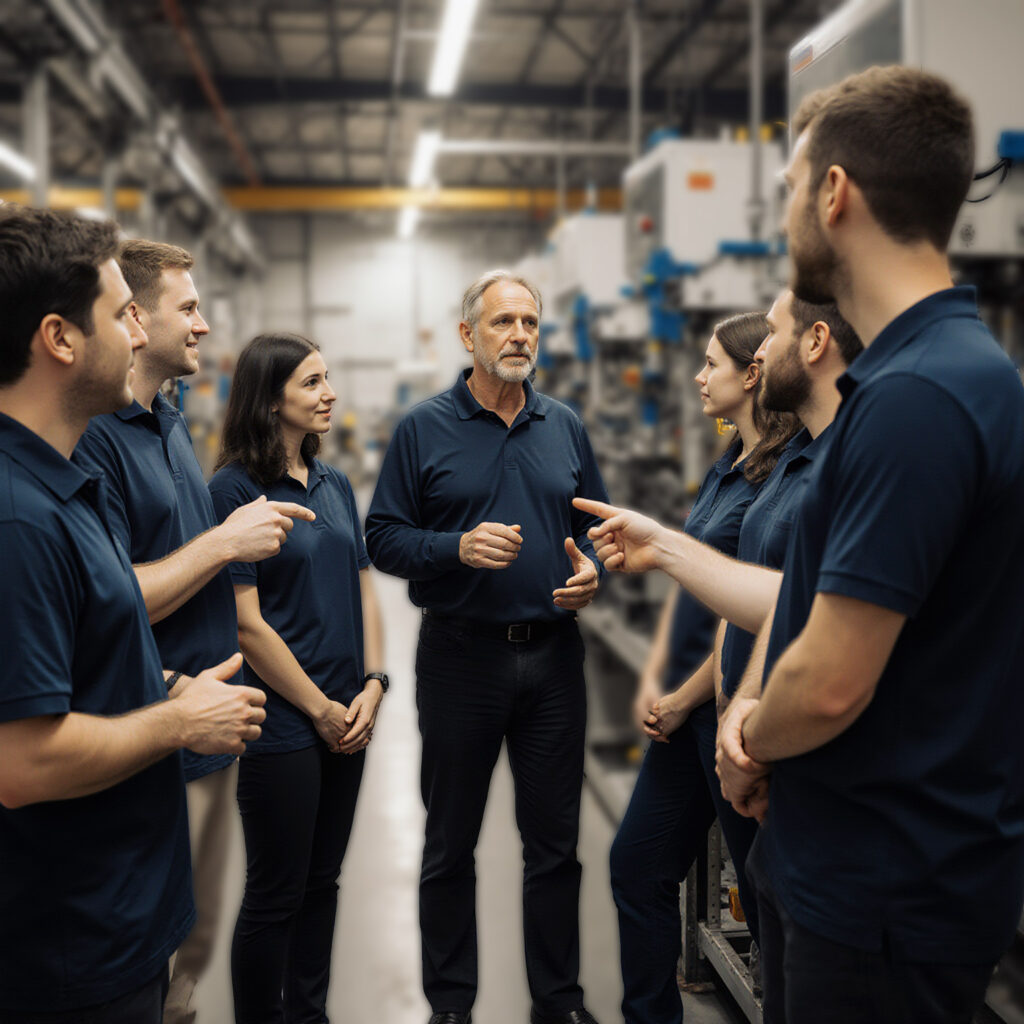
After one of his visits to Sudsies, Bruce sent me a note that I still think about. He told me that of all the positive impressions he took away from our operation, the one that stood out most was how enthusiastic our team was and how well they worked together. Then he added something I didn’t expect. He said he hadn’t seen teamwork like that since his days as a submariner in the U.S. Navy.
That comparison meant a lot, especially coming from someone with Bruce’s background.
Why Bruce’s Perspective Matters
Bruce’s career didn’t begin in dry cleaning. Before he ever designed equipment or taught a seminar, he served as a submariner in the Navy. Anyone who understands that environment knows it’s not built on hierarchy alone. It’s built on trust. On shared responsibility. On knowing that everyone’s role matters and that success depends on people working together without ego or territorial thinking.
On a submarine, there’s no such thing as “not my job.” Systems are interconnected. People rely on one another completely. Communication has to be clear. Respect has to be real. When Bruce talked about teamwork, he wasn’t speaking in abstract terms. He was drawing from lived experience in one of the most demanding team environments there is.
That’s why his observation carried weight. He wasn’t impressed by surface-level culture or polite behavior. He recognized something deeper. He saw people who were comfortable working together, helping one another, asking questions, and sharing responsibility without friction.
How Our Paths Crossed
Bruce and I didn’t meet through philosophy or leadership conversations. We met through work.
Sudsies purchased equipment from EZ Timers Manufacturing, and Bruce came to Florida to help with installation and training. On his visits, he worked directly with our team, leading seminars on steam systems, boiler operation, and electrical systems commonly found in dry-cleaning plants. These weren’t casual walkthroughs. They were detailed, technical sessions.
What struck him wasn’t just how our systems ran, but how our people showed up. They weren’t hesitant to ask questions. They weren’t disengaged. They weren’t waiting to be told what to think. They were curious, focused, and collaborative. That kind of environment doesn’t happen by accident.
The Value of Great Partnerships
Bruce is the kind of partner every operator hopes to work with. He doesn’t just sell equipment and disappear. He teaches. He explains. He stays available. He cares about whether the people using his systems actually understand them.
His company, EZ Timers Manufacturing, reflects that approach. The products he designs are meant to solve real problems, reduce unnecessary costs, extend equipment life, and make operations more reliable. But more importantly, he takes the time to make sure teams know why those systems matter and how to use them properly.
That alignment matters to me. The best partnerships aren’t transactional. They’re built on mutual respect, shared values, and a belief that people come first. Bruce doesn’t separate systems from people, and neither do I.
What Leadership Looks Like in Practice
Bruce’s comment about teamwork wasn’t just a compliment. It was a reminder.
Leadership isn’t about titles or org charts. It’s about creating environments where people feel safe contributing, asking questions, and supporting one another. It’s about removing silos before they form. It’s about recognizing that the strongest operations are built on relationships, not just processes.
When someone like Bruce, with decades of experience and a background in one of the most team-dependent environments imaginable, recognizes that kind of culture, it reinforces why we do things the way we do.
Strong teams don’t happen overnight. They’re built through consistency, trust, training, and care. They’re sustained through leadership that values people as much as outcomes.
That’s what Bruce saw. And coming from him, that meant everything.
Selected references and further reading
U.S. Navy, Submarine Force Mission and Culture
https://www.navy.com/careers-benefits/careers/electronics-technology/submarine-officer
Harvard Business Review, The Secrets of Great Teamwork
https://hbr.org/2016/06/the-secrets-of-great-teamwork
McKinsey & Company, The State of Organizations 2023: Ten Shifts Transforming Organizations
https://www.mckinsey.com/capabilities/people-and-organizational-performance/our-insights/the-state-of-organizations-2023
MIT Sloan Management Review, Building Better Teams at Work
https://sloanreview.mit.edu/article/building-better-teams-at-work/
Deloitte Insights, The Social Enterprise and Human-Centered Leadership
https://www2.deloitte.com/us/en/insights/focus/human-capital-trends.html
The Ritz-Carlton Leadership Center, Service Excellence and Team Culture
https://ritzcarltonleadershipcenter.com/
Simon Sinek, Leaders Eat Last
https://simonsinek.com/books/leaders-eat-last/