
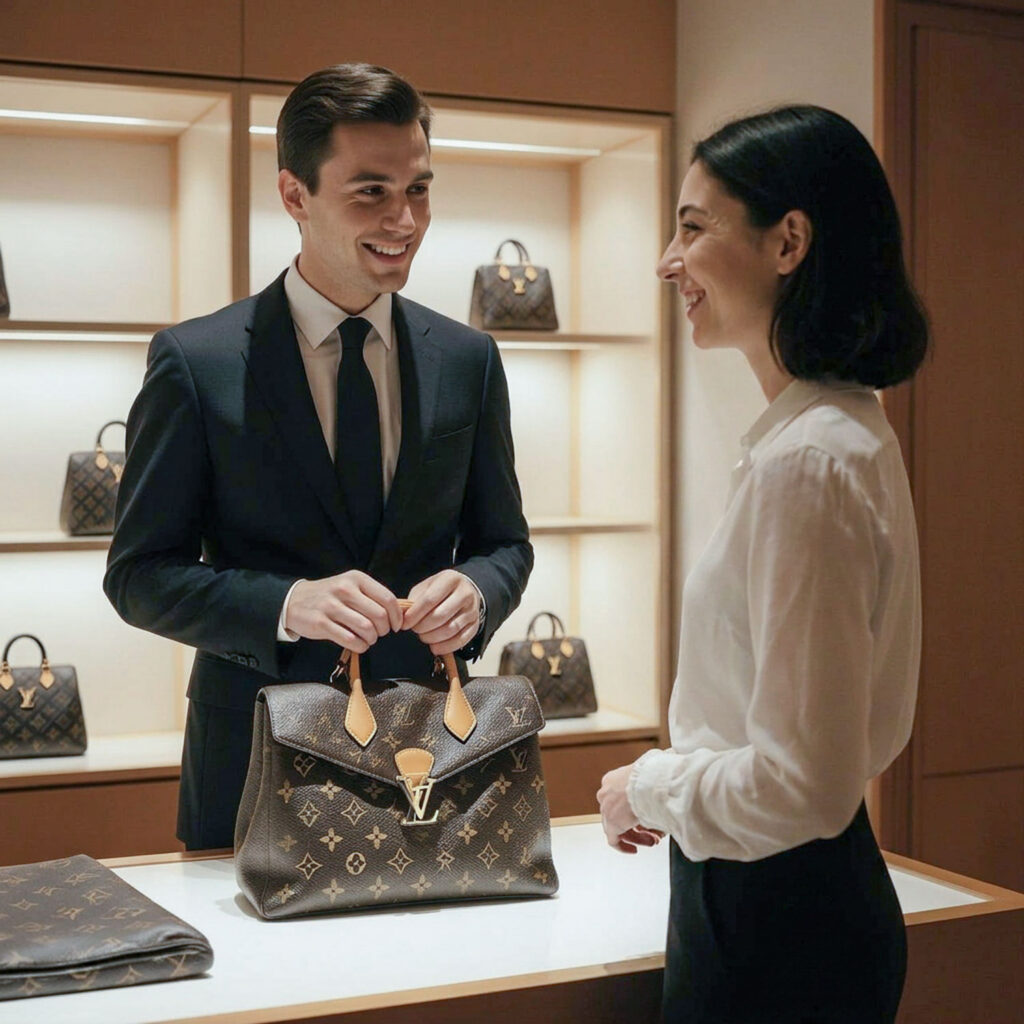
Luxury service used to be described in the language of display. Visible opulence. Elaborate environments. Formal gestures designed to impress. Some of that still has its place, but I think the meaning of luxury service has become more precise. Today, it is less about ornament for its own sake and more about relevance, discretion, continuity, and a level of care that makes the person being served feel exceptionally well understood. Bain & Company’s luxury work has noted that luxury consumers are increasingly prioritizing experiences, while McKinsey & Company’s recent luxury analysis emphasizes that clients are becoming more diverse and are looking for more differentiated experiences, not just expensive products.
In other words, luxury service is becoming less theatrical and more intelligently organized around the individual. The most valuable thing a premium provider can offer now is not simply polish. It is relief from friction, delivered with judgment. McKinsey’s broader work on personalization makes the same point from another angle: the companies gaining ground are the ones using better systems to create more tailored experiences rather than more generic ones.
At Sudsies, that matters because luxury garment care should not feel performative. It should feel calm, exacting, and deeply reliable. The guest should sense that the company knows what matters, remembers what matters, and handles details in a way that respects both the garment and the person behind it. That, to me, is a more mature definition of luxury than ornament alone. The Ritz-Carlton’s own articulation of its Gold Standards is useful here because it frames luxury service not as spectacle, but as a disciplined foundation for how the brand operates every day.
One reason the definition is changing is that affluent and highly discerning customers are busier than ever and less patient with unnecessary ceremony. They still want excellence. They still want quality. But what they increasingly value is smart convenience, anticipation, and a service experience that removes burdens without asking them to admire the machinery behind it. Bain’s luxury analysis points to a continued shift toward experiences, and McKinsey’s work on personalization argues that better tailoring is becoming a more important source of advantage.
Another important part of modern luxury service is continuity. A guest should not feel like they are beginning from zero every time. The provider should know the history, preferences, expectations, and rhythms of the relationship. That continuity signals seriousness. It tells the guest this is not generic premium treatment, but tailored stewardship. McKinsey’s personalization research supports this broader direction, emphasizing the growing commercial importance of experiences that feel specific to the individual rather than standardized across everyone.
Discretion matters more now as well. The strongest luxury services understand that trust includes privacy, restraint, and good judgment. Not every premium customer wants visible fanfare. Many want quiet competence, confidence, and the reassurance that important responsibilities are being handled properly in the background. Bain’s recent luxury findings, with their emphasis on evolving consumer priorities and the resilience of luxury hospitality, fit that shift toward more thoughtful, experience-led forms of value.
I also think modern luxury service requires stronger substance beneath the polish. Beautiful presentation still matters, but it has to rest on real expertise. In garment care, that means technical knowledge, careful handling, excellent finishing, strong recovery, and operational consistency. Without those things, the luxury positioning becomes fragile very quickly. Ritz-Carlton’s long-standing emphasis on service standards and service recovery is instructive because it suggests that high-end service is sustained by method, not mood.
Entrepreneurs in premium categories should pay close attention to this shift. Luxury service today is less about excess and more about precision. It is less about making the provider look impressive and more about making the guest feel intelligently cared for. That distinction should change design, staffing, communication, and standards. McKinsey and Bain both point toward a luxury market where differentiation comes increasingly from experience quality and relevance, not just from price point or surface-level prestige.
At Sudsies, I want luxury service to feel exact, gracious, and worthy of confidence. I want it to communicate that we understand the guest’s time, wardrobe, preferences, and expectations. I want the service to feel less like spectacle and more like a trusted extension of a well-run life.
What luxury service really means today, in my view, is not louder attention. It is better attention. It is care refined to the point where the customer feels more ease, more privacy, and more confidence. That is where I believe premium service categories are headed, and it is the direction worth building toward.
Selected references and further reading
Bain & Company, Luxury Goods Worldwide Market Study
https://www.bain.com/insights/luxury-goods-worldwide-market-study-fall-winter-2024/
McKinsey & Company, The State of Luxury 2025
https://www.mckinsey.com/industries/retail/our-insights/state-of-luxury
McKinsey & Company, The Value of Personalization
https://www.mckinsey.com/capabilities/growth-marketing-and-sales/our-insights/the-value-of-getting-personalization-right-or-wrong-is-multiplying
The Ritz-Carlton, Gold Standards
https://www.ritzcarlton.com/en/about/gold-standards/
The Ritz-Carlton Leadership Center, Service Excellence Philosophy
https://ritzcarltonleadershipcenter.com/our-philosophy/
Forbes Travel Guide, The Evolution of Luxury Hospitality
https://stories.forbestravelguide.com/the-future-of-luxury-hospitality
Harvard Business Review, The New Rules of Customer Experience
https://hbr.org/2022/03/the-new-rules-of-customer-experience