
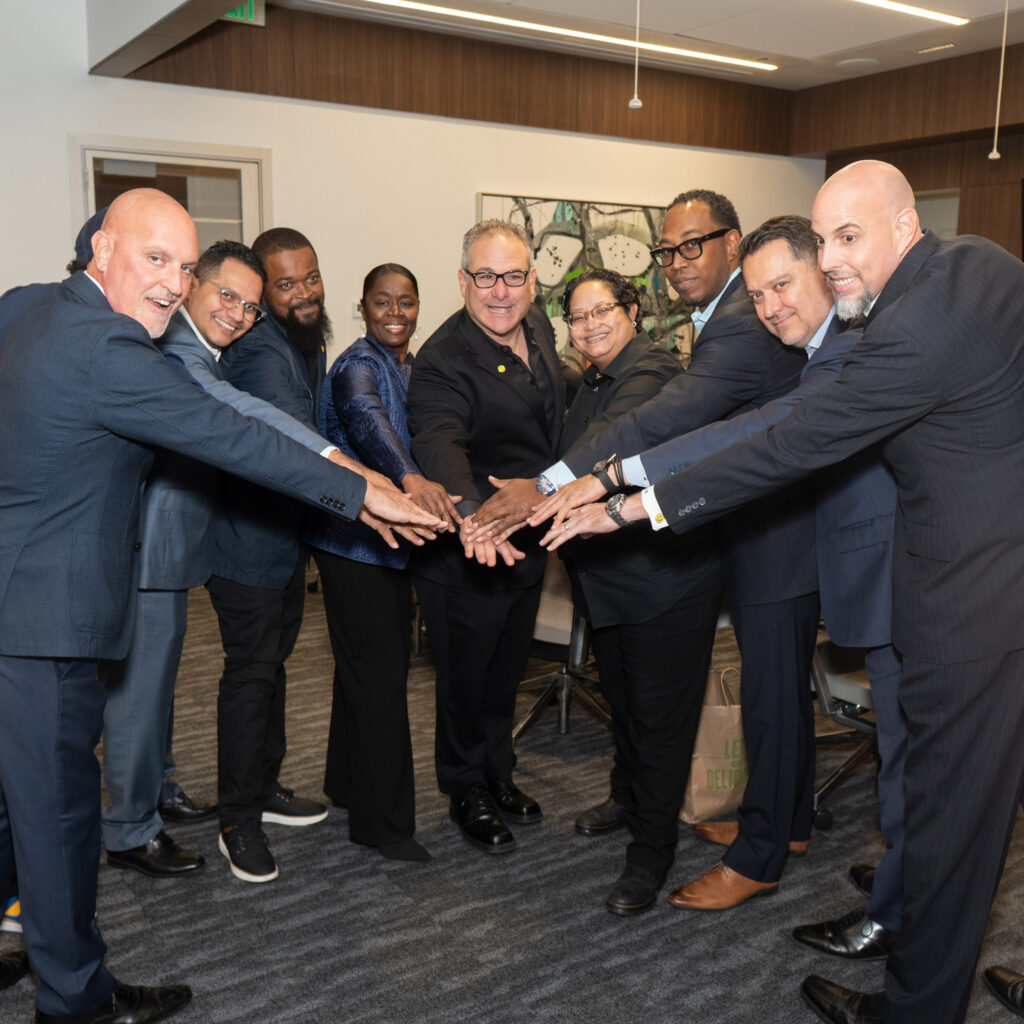
One of the most rewarding parts of entrepreneurship is realizing that growth is never only about the company. It is also about the people inside it, including the leader. Over time, I have learned that building Sudsies with a team changes you if you are paying attention. The company becomes stronger, certainly. But if the work is being done honestly, the leader is being changed as well. Your assumptions get challenged. Your language becomes more careful. Your patience gets tested. Your standards get clarified. You begin by trying to build the business, and before long the business is also building you.
At the beginning, many entrepreneurs assume that leadership mostly means direction. You set priorities, solve problems, make decisions, and push things forward. There is truth in that, especially in the early years when speed matters and every question seems to land on the founder’s desk. But as the company grows, leadership becomes less about having every answer and more about creating an environment where other people can grow into stronger answers with you. That shift sounds simple when written down. In practice, it requires humility, restraint, and a willingness to let the company become more intelligent than any one person inside it.
Growing with a team teaches humility because it reminds you, over and over again, that other people see things you do not. I have felt that very directly at Sudsies. Kerry Glasgow, in new business development, has a way of seeing opportunity not as a loose idea but as something that has to be translated into a real relationship, a real next step, and a real standard of follow-through. Watching that has reinforced for me that growth is not simply about enthusiasm. It is about disciplined conversion of possibility into action. Luis Moreno, as president, brings a different kind of clarity. He sees operational reality with unusual sharpness, and there have been many moments when his view of what the organization could actually carry has helped separate a good idea from a well-timed one. Jason Cespedes, in relationships, has taught me something equally important from another angle. He understands in a very lived way that trust is built through continuity, presence, and how people feel after the interaction is over. Spending time around people like that changes a leader because it becomes harder to confuse your own perspective with the whole picture.
It also teaches the value of communication. What feels obvious to a founder is often not obvious to the team. That is not a failure on the team’s part. It is simply the nature of proximity. The founder has been living with the issue, the opportunity, or the frustration for days or weeks, sometimes for months. Everyone else is meeting it at a different point in the story. I have learned that repetition is not a burden. It is a form of respect. Clarity is a form of respect too. So is listening. Some of the best internal moments at Sudsies have not come from formal presentations. They have come in conversations where someone asked a thoughtful question, challenged an assumption, or offered an observation from their part of the business that sharpened the whole conversation. A team gets stronger when people understand the standard and feel that their perspective can improve the work.
Another lesson is that trust grows through shared experience far more than through titles. Teams bond when they solve real problems together, recover from mistakes together, and keep showing up for demanding work together. Those experiences create a depth of understanding that no org chart can fully capture. I have seen that at Sudsies in small but telling moments. A difficult guest issue handled well. A project that required more cross-functional cooperation than expected. A day when the operation was under strain and people still found a way to stay composed and useful to one another. Those are the moments that quietly build belief inside an organization. They teach you who steadies the room, who communicates well under pressure, and who can be relied on when the easy version of the day disappears.
Growing with a team also changes how you think about time. Quick fixes may solve today’s issue, but they do not necessarily strengthen tomorrow’s organization. Development takes longer. It requires teaching, repetition, and a willingness to let people stretch. That can feel slower in the moment, especially for founders who are wired to solve quickly. But I have learned that some of the most durable progress at Sudsies has come from giving people enough room to grow into fuller responsibility instead of rushing to solve everything at the top. There is a difference between efficiency and maturity. One gets the immediate answer. The other builds future capability.
I have also learned that recognition matters more than many leaders realize. People do not need flattery. They do not need empty praise. But they do need to know that effort, improvement, and responsibility are being seen. Recognition strengthens belonging. It reinforces standards. It tells people that their growth is not invisible. Jason Cespedes has been a useful reminder of this because relationship-centered leadership requires attentiveness not only to guests, but also to the people doing the work. Luis Moreno has reinforced it from the operating side, where seriousness and accountability carry much more force when people also know that leadership sees what they are doing well. Recognition, when it is specific and honest, does not soften standards. It helps anchor them.
At the same time, growing with a team requires courage. Hard conversations cannot be postponed forever. Misalignment has to be addressed. Expectations have to be named. I have learned that the healthiest teams are not the ones without tension. They are the ones where tension can be handled honestly and constructively. That is part of what makes leadership relational rather than merely administrative. You are not just moving pieces on a board. You are helping real people understand where they stand, what the company needs, and how to rise to meet it.
Perhaps most importantly, growing with a team teaches that leadership is deeply relational. Businesses do not become stronger only because systems improve. They become stronger because people become more capable, more mature, and more committed to one another’s success. Kerry Glasgow, Jason Cespedes, and Luis Moreno each represent a different expression of that truth. One sharpens the company’s commercial edge. One deepens the quality of its relationships. One reinforces its operational seriousness. A founder who pays attention to that kind of leadership around him becomes harder to isolate inside his own instincts. That is a gift if he is wise enough to recognize it.
For entrepreneurs, this is worth remembering. Building a company is not only about scaling operations. It is about becoming the kind of leader who can keep growing alongside the people helping build the business. When that happens, success feels less like extraction and more like shared advancement. To me, that is one of the healthiest and most enduring forms of growth there is.
Selected references and further reading
Harvard Business Review, The Best Leaders Are Humble Leaders
https://hbr.org/2018/01/the-best-leaders-are-humble-leaders
McKinsey & Company, The Mindsets and Practices of Excellent CEOs
https://www.mckinsey.com/capabilities/strategy-and-corporate-finance/our-insights/the-mindsets-and-practices-of-excellent-ceos
Gallup, Employee Recognition and Workplace Engagement
https://www.gallup.com/workplace/236441/employee-recognition-low-cost-high-impact.aspx
Microsoft, Satya Nadella on Growth Mindset
https://news.microsoft.com/source/features/culture/satya-nadella-employees-need-growth-mindset/
MIT Sloan Management Review, How to Build Trust on Your Team
https://sloanreview.mit.edu/article/how-to-build-trust-on-your-team/
Simon Sinek, Leaders Eat Last
https://simonsinek.com/books/leaders-eat-last/
The Ritz-Carlton Leadership Center, Building Strong Service Cultures
https://ritzcarltonleadershipcenter.com/our-philosophy/