
Michael Jones has spent his life in the dry cleaning business, and he still talks about it with the enthusiasm of someone who genuinely loves the work.
As the owner of Highland Cleaners in Louisville, Kentucky, Jones carries forward a family legacy that began in 1944. Today the company operates twelve locations across the city, serving neighborhoods where customers still walk through the door and are greeted by people who know their name.
That personal connection has always been part of the business.
But over the past two or three years, Jones says that idea has taken on even deeper meaning through his involvement with a national group of dry-cleaning peers and the leadership of Jason Loeb, CEO of Sudsies, whom the group invited to help lead their discussions.
At the center of it all is a philosophy Jones sees reflected in how Jason approaches both business and people: “It’s not a transactional relationship.”
For Jones, that idea explains not only how Jason leads, but how great garment care businesses operate at every level.
A Room Full of Peers
Jones is part of a best-practices group called T2, a continuation of what was once known as the Tuckman Group, a collective of operators committed to raising industry standards together. About a dozen operators from across the country participate, representing markets from Los Angeles and Texas to Buffalo, Orlando, and Louisville.
The members are intentionally spread out geographically so they will never compete with each other. That distance creates something valuable: the ability to speak openly about challenges, decisions, and opportunities without holding anything back.
Three times each year, the group gathers at one member’s facility for several days of conversation and evaluation.
During those meetings, the group dives deeply into the realities of running a garment care business. Marketing strategies, customer service, supply purchasing, and production processes all become part of the discussion.
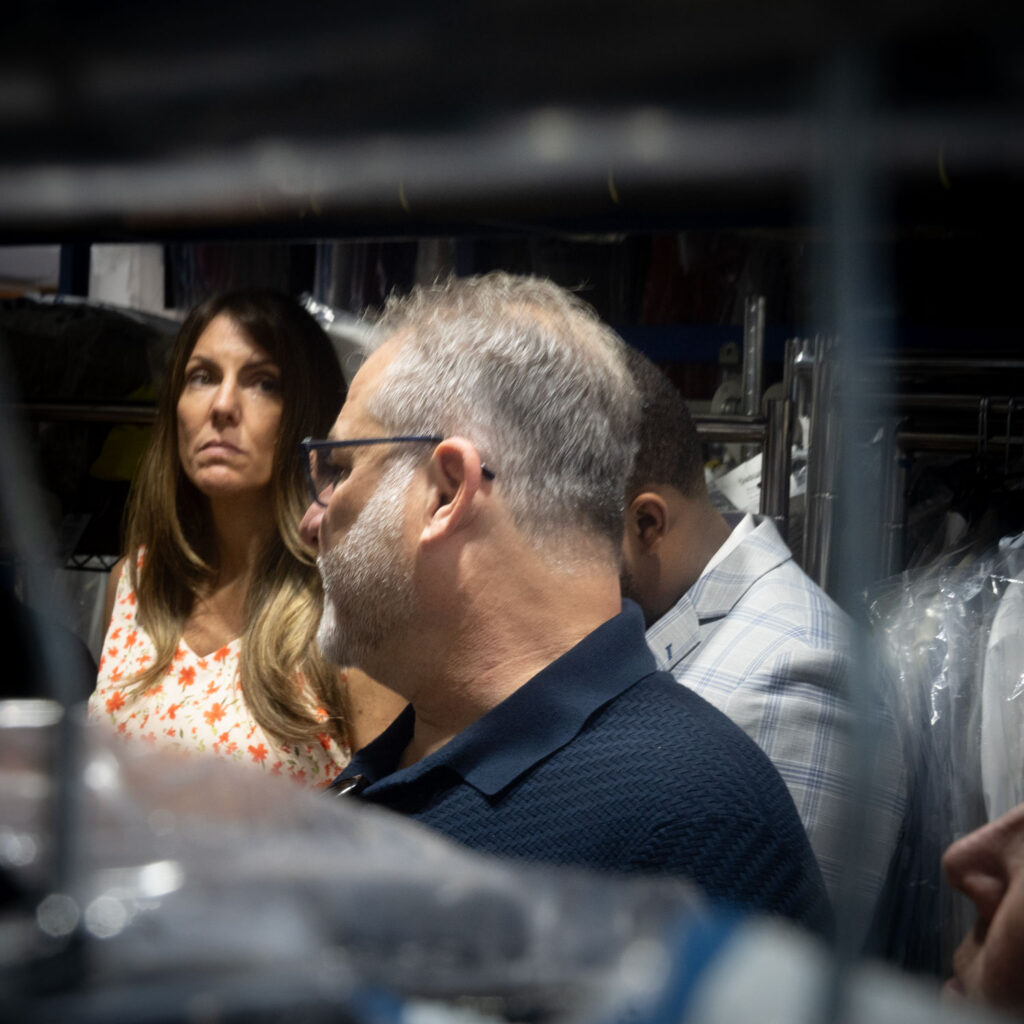
At some point during the visit, the group tours the host operator’s plant.
For many members, that walk-through becomes the most valuable part of the meeting. When peers see another operation with fresh eyes, they immediately notice things that daily familiarity can hide: workflow patterns, pressing techniques, spotting procedures, and customer counter presentation.
The goal isn’t criticism.
It’s improvement.
Jones often describes the group as functioning like a board of advisors for each member’s business.
Inviting Jason Into the Conversation
Two years ago, the group decided to reach out to Jason.
Several members already knew him through industry discussions and online forums where he frequently shared ideas with other operators. His reputation for generosity with ideas had spread well beyond Miami.
Someone suggested inviting him to help guide the group’s conversations.
At first, many assumed he would be too busy.
Instead, he agreed.
Since then, Jason has helped facilitate the group’s meetings, adding perspective while encouraging the open exchange that already defined the group. His role isn’t about directing the conversation as much as helping the group think more intentionally about how they run their businesses.
What surprised Jones most, though, was the level of personal investment Jason brought to the relationship.
If a challenge came up during a meeting, Jason might check back weeks later to see how things turned out. If someone shared a difficult decision they were facing, he wanted to know what path they chose and how it worked out.
That kind of follow-up left a strong impression on the group.
The Same Philosophy Inside the Business
What Jones began to notice is that the same philosophy Jason demonstrates with peers also shows up in how he leads his company.
To better understand that culture, Jones has sent members of his leadership team to Miami to spend time at Sudsies and see the operation firsthand. Two employees were there just recently, observing how the team trains and works together.
When they return, the conversations rarely center on equipment or machinery.
Instead, they talk about the atmosphere.
Jason has created a workplace where employees are encouraged to grow, support one another, and take pride in what they do. Team members feel connected to the company and to each other in a way that stands out to visitors.
One message they consistently hear from Jason is that employees should aspire to the next level within the organization. Advancement isn’t viewed as competition. It’s part of building a stronger team.
For Jones, that mindset reflects the same principle he sees in the peer group.
People succeed together.
The Customer Relationship
That same philosophy carries directly into how great garment care businesses serve their customers.
Highland Cleaners operates primarily through neighborhood storefronts where relationships still matter. Customers walk in and are greeted by staff members who recognize them, ask about their families, and remember details about their garments.
In a retail environment increasingly dominated by automation and digital interfaces, those small interactions are becoming rare. But in dry cleaning, they remain essential. It’s a standard Jones says he’s been reminded of through watching how Jason leads—where every relationship, whether with a customer, an employee, or a peer, is treated as worth investing in.
But in dry cleaning, they remain essential.
Garments belong to someone. They may carry financial value, sentimental value, or both. Caring for those items requires trust.
For Jones, that responsibility reinforces the same idea he sees Jason modeling again and again, and it applies to customers, employees, and peers alike.
Collaboration That Strengthens the Industry
Dry cleaning has historically been a guarded industry. For many years, operators believed success depended on protecting knowledge and keeping processes private.
Groups like T2 represent a different approach.
When operators from different regions collaborate openly, ideas spread and standards rise. Instead of competing, peers become advisors who help one another navigate challenges and opportunities.
Jason’s willingness to participate in that kind of environment has made a lasting impression on Jones and the rest of the group.
Despite running a demanding operation of his own, he continues to invest time in conversations, relationships, and the success of others.
For Jones, that commitment reflects a broader truth about the industry.
The strongest garment care businesses aren’t built around transactions.
They’re built around people.